

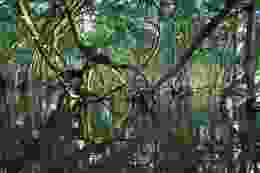


Natural Capital Accounts: Where Accounting Meets Nature
When I first came across natural capital accounts, my accounting brain immediately went into overdrive — but where are the debits and credits? If nature is being described as capital, how does the asset get recognised? Where is the asset register? How is it valued? Could it be a memorandum account, or is it something completely different? Natural capital accounts become so interesting because they sit at the point where accounting and nature have started to meet.
At its simplest, natural capital accounting is a way of making the state of nature more visible and understandable. Natural capital is the stock — in other words, the natural asset itself — such as wetlands, rivers, soils, woodlands, coastal habitats and ecosystems. Ecosystem services are the benefits that flow from those natural assets: flood regulation, water purification, carbon storage, cooling, pollination and recreation. The purpose of a natural capital account is to record the extent of those assets, their condition, the services they provide and, potentially — in theory at least for now — an estimated monetary value.
But these are not statutory financial statements for nature. There is no neat double-entry journal that says debit wetland, credit flood protection. A natural capital account is better understood as a structured supporting schedule or memorandum account: part asset register, part condition review, part service-flow statement and part valuation note. In accounting terms, it gives us a way to ask whether the natural asset is improving, deteriorating, or creating risks and opportunities that need to be understood and managed. The value of the approach is not that it forces nature into conventional financial accounting rules, but that it applies useful accounting discipline: measurement, recording, consistency, evidence, transparency and insight. It also brings nature into the rhythm of regular review and reporting cycles, so changes in condition, services and value can be analysed and action taken.
The “so what?” is important. If nature remains invisible in decision-making, it is easier to degrade it without seeing the economic consequence. Natural capital accounts do not solve that problem on their own, but they may help organisations identify their dependencies and impacts on nature. That, in turn, can make it easier to understand the risks and opportunities that need to be managed. In that sense, they feel like part of the next step in sustainability reporting: moving beyond climate-related reporting alone and bringing the climate and nature nexus into sight.
On paper, natural capital accounts can sound like a neat accounting approach. The more interesting consideration is whether they will become useful in practice as sustainability reporting continues to evolve. The United Nations System of Environmental-Economic Accounting — Ecosystem Accounting (SEEA EA) is starting to provide structure and a framework for this, but the real test will be whether organisations begin to use natural capital accounting to support better decision-making. That is the question I am keen to explore next.
Here is a link to Homepage | System of Environmental Economic Accounting
Please reach out and contact us at
If you're looking for support on your sustainability journey, or would like to discuss partnership opportunities, we'd love to hear from you.